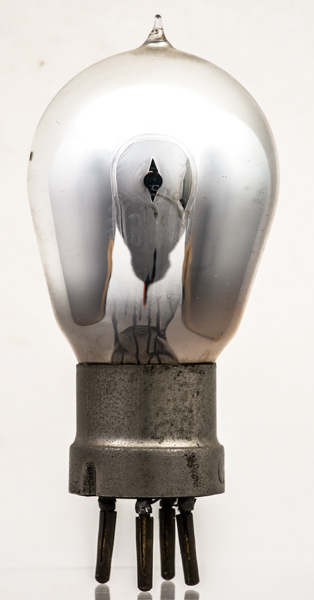
The B4 was the first dull emitter valve from BTH (The British Thomson-Huston Company) and was first introduced in 1923. In 1924 the B6 was released that reduced the filament consumption but offered about the same performance. BTH claim that the B4 was the first 6 Volt valve in the UK to draw only 0.25 A.
The design of the B4 was for an AF amplifier to drive small loudspeakers. These would not be the moving coil devices of today but probably a horn device powered by an oversize earpiece and being wound with a high impedance coil that was wired directly into the anode circuit of the valve.
The base shell has a central groove and this base shell is typically found on M-OV valves. The Bakelite on the base infill has the BTH logo. This base shell type was in use around 1923-4.
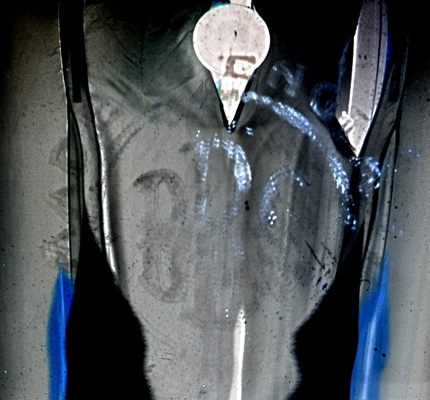
This enhanced image shows the little used type three BBC stamp that was finally omitted from valves in 1927.
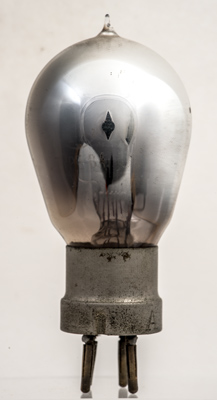
The two part base pins that would compress when inserted to make a positive contact with the holder. The metal base shell has A stamped into it to indicate the anode pin.
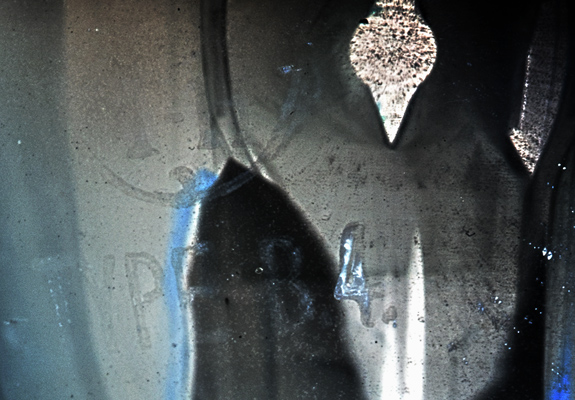
This picture shows the BTH logo with Type B4 below. After the AEI merger valves carried the Mazda Brand and BTH Rugby concentrated on heavy equipment.
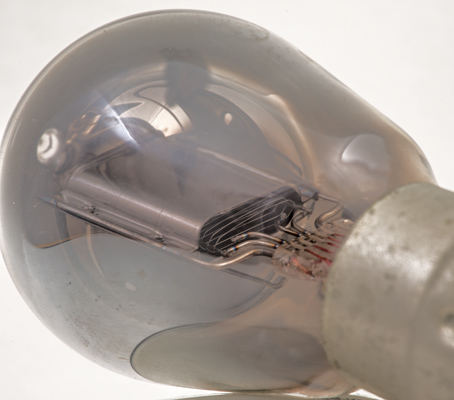
Thinning of the gettering allows a view inside.
At full size the image shows the single strand filament formed as an inverted V. The supports show evidence of melting but not the filament wire. This suggests that the tungsten wire was retained mechanically by the melting of the support wire around the filament.
The balloon envelope is 51 mm in diameter and, excluding the B4 base pins, is 96 mm tall.
References: Adverts, boxes & 1003. Type B4 was first introduced in 1923. See also1923 adverts.