|
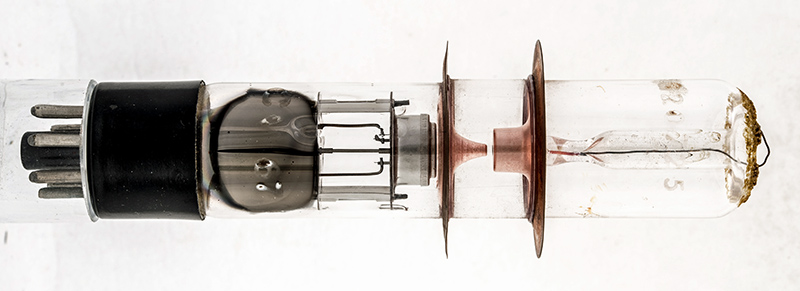
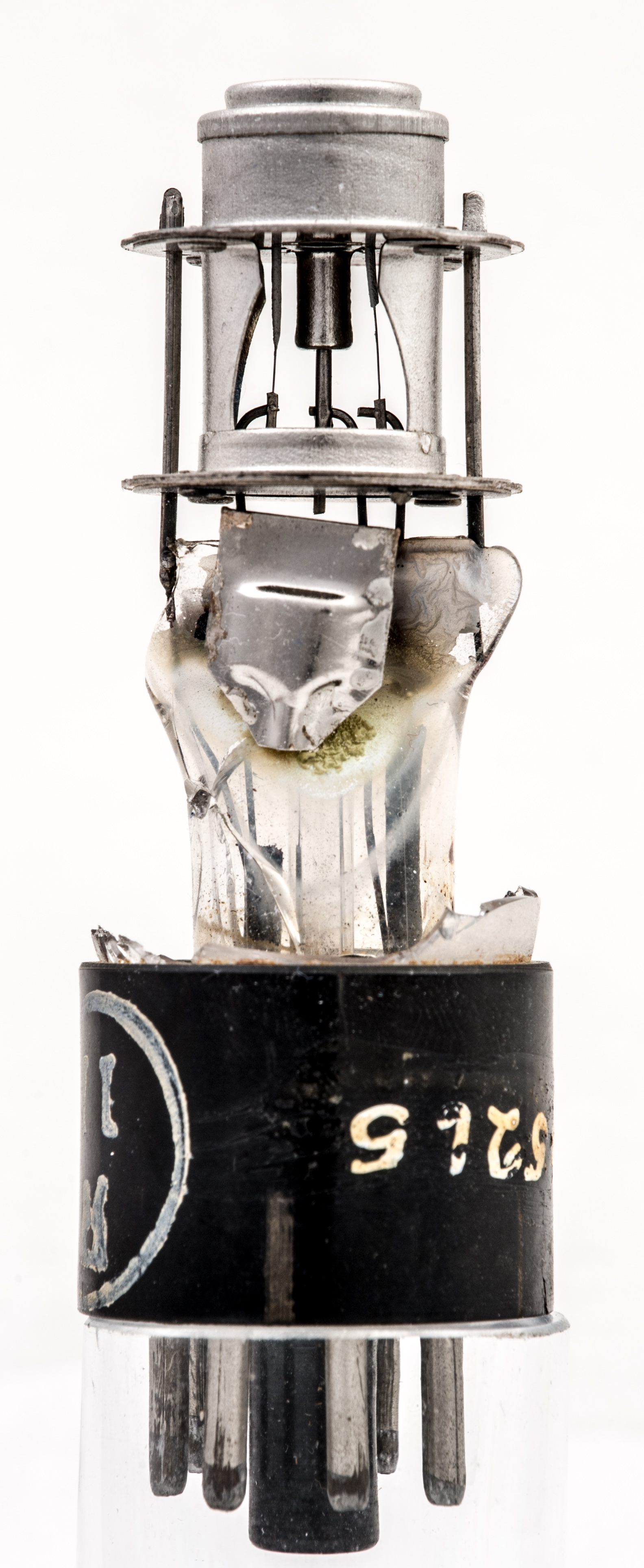
An almost complete CV67.
The CV67 is a reflector klystron that was used in first generation 10 cm radar receivers. Unlike the fixed frequency magnetrons used for the transmitter the klystron was tunable and so could net onto the transmitter frequency. Thus the reflector klystron was used as the local oscillator in the first mixer stage of the radar receiver.
The klystron in these images arrived in one piece but fell out of the large box that the donations arrived in and broke into many pieces.
To understand the various parts of the valve the diagram below identifies the components. The external resonator cavity was not present - only the klystron itself. The type of resonant cavity that the CV67 would fit into can be seen here.
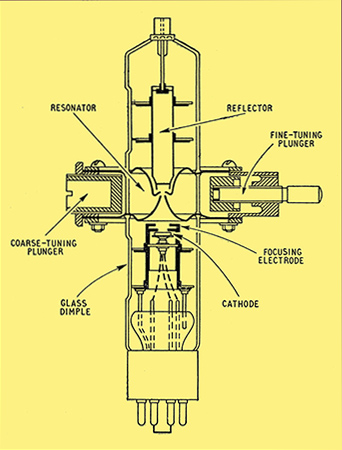
Electrons are emitted from the indirectly heated flat disc cathode and focused before leaning the gun assembly as a fine beam. The resonant cavity is held positive of the cathode and the beam passes through the cavity and encounters the negative voltage on the reflector or repeller. The electrons then pass back into the resonator. The presence of an alternating voltage either aids the flow of electrons or retards it thus modulating the speed or velocity of the beam.
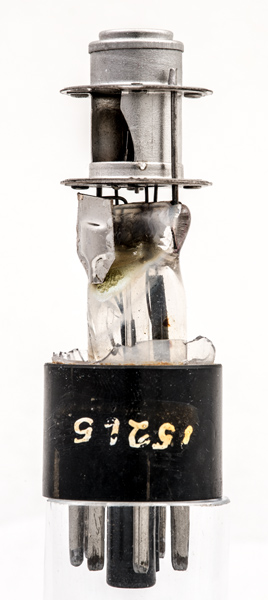 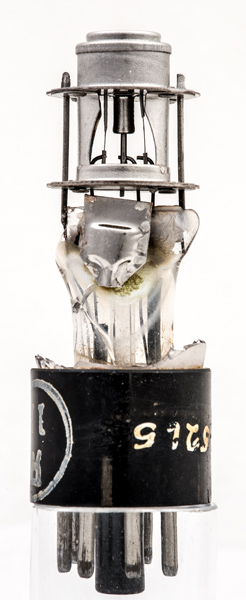
The electron gun and International Octal base.
In the above image the heater is a single strand insulated with alumina. The cathode is in the centre with the focus electrodes at the top.

Side view of the electron gun.

Looking into the top of the electron gun. The flat cathode is in the centre with the focus electrode around the outside.
The cathode aperture is 3.5 mm diameter. The focus electrodes are magnetic with a circular opening 5.9 mm diameter. The outer diameter of the focus magnet is 12 mm.
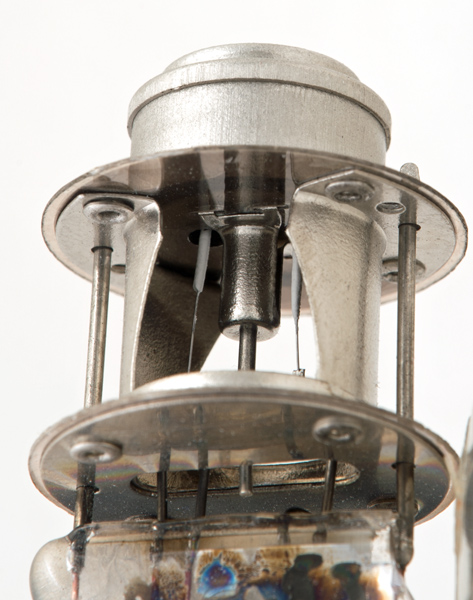
The insulated heater wires with the white coating.
The electron stream reflects back into the resonant cavity and the reflector is a small cup that connects to the top cap. The glass fused to the rod defines the position of the reflector relative to the resonator. The cup internal diameter is 5.25 mm and is 2.0 mm deep. The rod is 56 mm long.
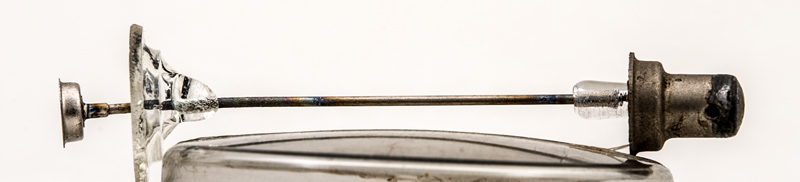
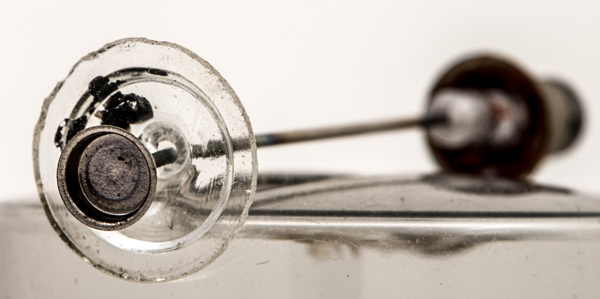
The cup reflector at the end of the rod.
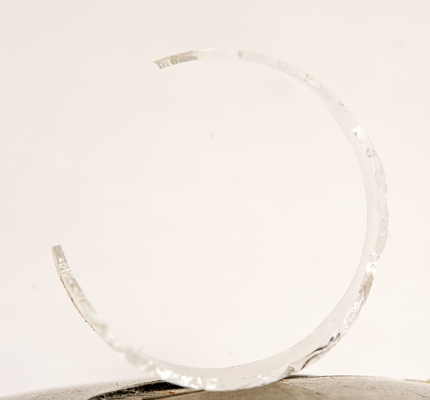 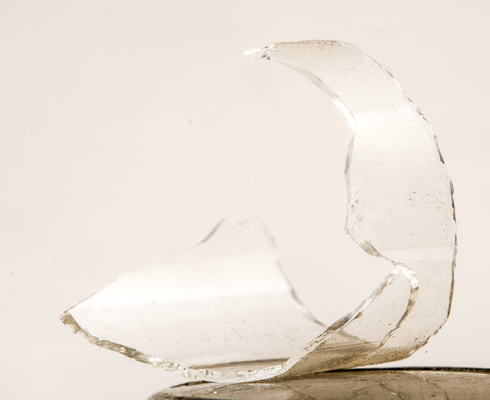
Remains of the envelope.
The broken glass envelope. The diameter is 29.25 mm and the thickness is 1.0 mm.
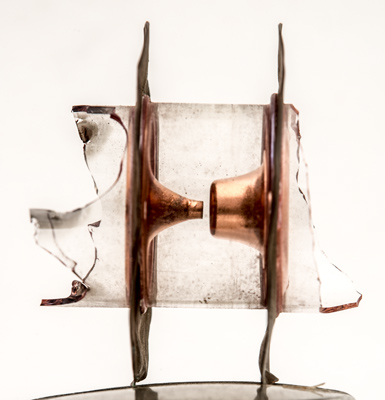 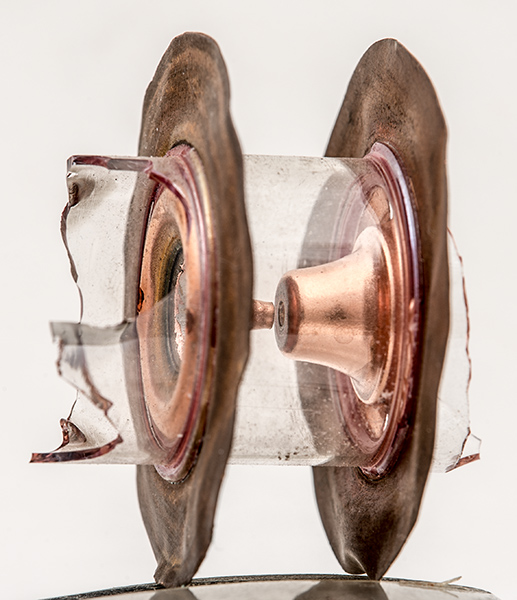
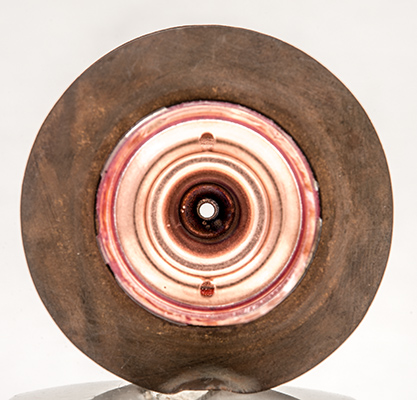 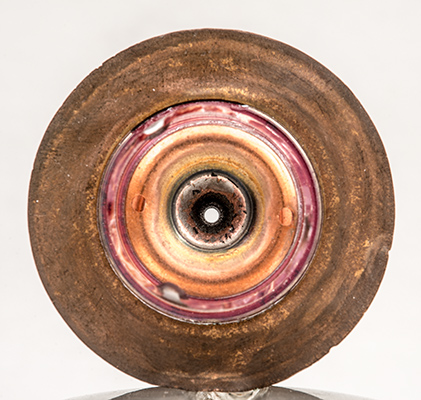
The lower electrode of the resonator is on the left.
The resonator hardware clamps to the copper rings. The rings are 51.5 mm diameter and about0.25 mm thick. The distance between them is 20 mm.
|