|
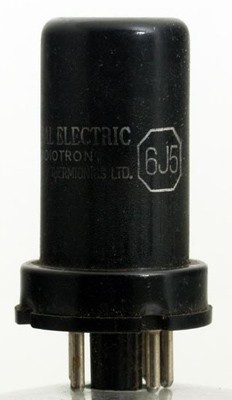  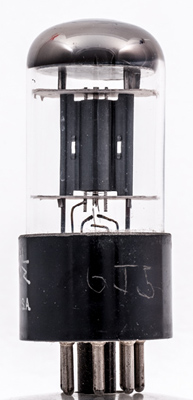 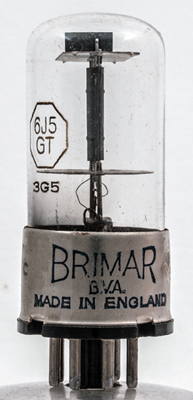 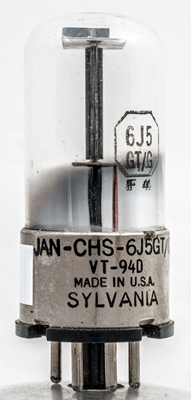
The 6J5 shapes through time.
The International Octal Base (IO) was introduced by RCA on April 1, 1935 with their metal envelope valves and hard glass disc insert. The rugged construction was much used in valves for mobile and military use.
These rugged valves had benefits but also drawbacks. The fitting of a top cap involved complexity that worked against the original concept. Glass-envelope variants were subsequently produced for cost-saving and to avoid the need for insulating the internal structure from the envelope.
These glass versions had the envelope cemented onto a Bakelite base cap and the cap size was generally standardised.
Later still the introduction of compact Glass Tubular (GT) valves and new manufacturing methods introduced the two part base cap the featured a small insulated base holding the pins and a metal skirt. This form of construction had a wider base than the Bakelite base caps and thus were not always compatible with equipment designed for the smaller diameter G based valves.
To identify GT valves with the smaller diameter base cap the suffix GT/G was introduced.
Essentially all the types had the same basic characteristics with dimensions and general construction being the differences.
The next variant was the 'Y' suffix. This denoted the use of wood loaded phenolic resin base caps that was less lossy than Bakelite at RF and cheaper than ceramic base caps.
|